Bac Water With Benzyl Alcohol Can I buy bacteriostatic water at my pharmacy?
\nCan I Buy Bacteriostatic Water at My Pharmacy? A No-Nonsense Guide
\n\nIf you are exploring the world of fitness optimization, peptide research, or specialized wellness protocols, you have likely run into a frustrating logistical hurdle. You have your research materials ready, but you are missing the crucial fluid needed to reconstitute them. Naturally, your first thought is to head down the street to the local drug store, leading to the obvious question: Can I buy bacteriostatic water at my pharmacy?
\n\nFor many guys in the 18-24 demographic, navigating the pharmaceutical landscape can feel like walking through a bureaucratic minefield. You are looking for a straightforward product—essentially purified water with a mild preservative—yet finding it sitting on a retail shelf next to the distilled water is practically impossible. This article will break down the reality of retail pharmacy availability, look at what the science says about multi-use vials, and provide a clear framework on how to source this item safely without falling for sketchy online scams.
\n\n\n\n
What Bacteriostatic Water Is and Who It Might Fit Best
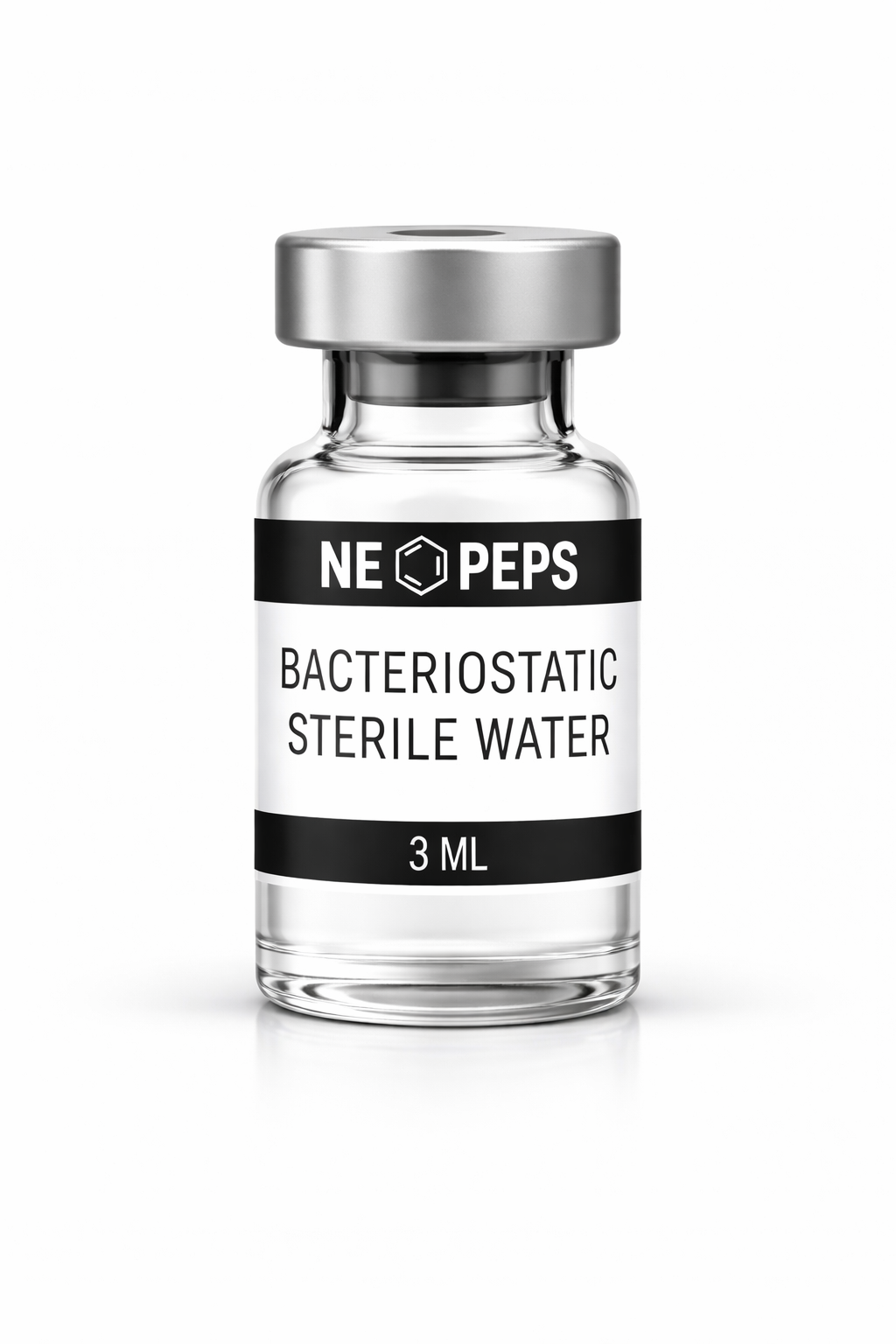
\nBefore trying to source it, it is critical to understand what this liquid actually is. Bacteriostatic water for injection is sterile, non-pyrogenic water containing 0.9% benzyl alcohol ($C_7H_8O$) added as a bacteriostatic preservative. The addition of benzyl alcohol stops the growth of most potentially contaminating bacteria, allowing the solution to be accessed multiple times with a sterile syringe over a period of up to 28 days.
\n\nThis product is specifically designed for individuals who are reconstituting lyophilized (freeze-dried) powders that require multiple doses over several weeks. If you are handling compounds that need to be administered in precise, micro-dosed increments over a 14-to-28-day cycle, this fluid is typically the baseline standard. It fits best for independent researchers and individuals under medical supervision who require a stable, multi-dose solvent that minimizes the risk of microbial proliferation during repeated needle punctures.
\n\nConversely, it is not intended for large-volume intravenous infusions because benzyl alcohol can cause toxicity in large amounts. It is also completely unsuitable for use in newborns due to the risk of "gasping syndrome" associated with benzyl alcohol metabolism in infants.
\n\n\n\n
Practical Benefits and Where It Falls Short
\nWhen looking into whether you can buy bacteriostatic water at a local pharmacy, it is helpful to weigh the practical utility against the clear limitations of the product. The core benefit is longevity. Because the 0.9% benzyl alcohol prevents bacterial replication, a single 30mL vial can safely serve as a solvent for multiple pull-drawn doses over a month, provided proper sanitization protocols are maintained.
\n\n\n Personal Experience Case (User Review):\n\n
\n "I was prescribed a lyophilized peptide compound by my clinic but needed to source my own mixing solution. I asked around: Can I buy bacteriostatic water at my pharmacy? I went to three major retail pharmacies in my area. Two told me they didn\'t stock it, and the third said they only sell it if it\'s explicitly tied to an active prescription in their system. Eventually, I had to order a 30mL vial from a verified online medical supplier for $18. Using it over a 2-week period, the solution remained perfectly clear, and I experienced zero localized irritation or site redness. For multi-dose prep, it did exactly what it was supposed to do."\n
However, relying on this solution has its downsides, particularly if your technique or sourcing is flawed. The benzyl alcohol can cause a mild, transient burning or stinging sensation at the site of application for some individuals with sensitive skin. Furthermore, if you exceed the 28-day window, the preservative begins to lose its efficacy, dramatically increasing the risk of introducing bacteria into your solution.
\n\n\n Negative Case (Contamination Warning):\n\n
\n A forum user in an online fitness community attempted to bypass buying proper mixing water entirely. To save money, he used standard over-the-counter sterile saline water meant for single-use contact lenses to mix his compound. Because saline lacks a bacteriostatic agent, bacteria multiplied rapidly after the first needle puncture. By day five of using the same mixture, he developed a painful, warm, and swollen sub-cutaneous infection at the injection site that required a trip to urgent care and a course of oral antibiotics. This highlights why skipping out on proper bacteriostatic solution is a major risk.\n
 \n
\n\n\n
What Research Suggests and What It Doesn\'t
\nClinical data regarding bacteriostatic water focuses heavily on its preservation efficiency and its safety thresholds. According to standard pharmacological guidelines, the 0.9% benzyl alcohol concentration is highly effective at inhibiting the growth of common pathogens like Staphylococcus aureus and Pseudomonas aeruginosa. However, it is vital to note that "bacteriostatic" does not mean "bactericidal." It does not actively kill pre-existing bacteria instantly; rather, it prevents new bacteria from multiplying and colonizing the fluid.
\n\nThe research emphasizes strict boundaries:\n
- \n
- The 28-Day Rule: Studies show that after 28 days of initial vial entry, the protective capacity of the benzyl alcohol drops significantly due to exposure to air and potential micro-contaminants. \n
- Volume Limitations: Clinical literature warns against using bacteriostatic water for any injection volume exceeding 30mL per day in adults due to the metabolic load of benzyl alcohol on the liver. \n
- No Treatment Properties: It is crucial to remember that this fluid carries zero therapeutic weight on its own. It will not enhance the efficacy of your mixed compounds, accelerate fat loss, or build muscle. It is strictly an inert delivery vehicle. \n
\n\n
Ingredients, Formats, and Quality Signals
\nWhen searching for this product, you need to know exactly what to look for on the label to ensure you are buying a legitimate medical product rather than a dangerous knock-off.
\n\nCore Ingredients
\n- \n
- Sterile Water ($H_2O$): Highly purified, distilled, and tested for the absence of pyrogens (fever-inducing substances). \n
- Benzyl Alcohol ($C_7H_8O$): Exactly 0.9% concentration acting as the antimicrobial preservative. \n
Common Product Formats
\nThe most frequent format you will find online or behind the counter is a 30mL plastic or glass vial with a flip-top cap and a rubber stopper. You may occasionally see 10mL or 20mL variants, but 30mL is the industry standard for research and clinical purposes.
\n\nQuality Signals to Check
\n- \n
- USP Designation: The label must explicitly state "USP" (United States Pharmacopeia), indicating it meets strict manufacturing and purity standards. \n
- Lot Number and Expiration Date: Legitimate medical supplies always have a clearly printed, stamped lot number and a crisp expiration date. If these are blurry, printed on a cheap sticker, or missing entirely, reject the product. \n
- Clear Solution: The liquid must be completely transparent. Any cloudiness, floating particulates, or discoloration means the vial is contaminated or degraded. \n
\n\n
Comparison of Common Options
\nIf you are still wondering about your sourcing options, the table below highlights how local pharmacies stack up against online vendors regarding cost, convenience, and availability.
\n\n| Format / Source | \nTypical Dose/Use | \nPros | \nCons | \nCost | \nBest For | \n
|---|---|---|---|---|---|
| Retail Pharmacy (CVS/Walgreens) | \n30mL USP Vial | \nGuaranteed medical grade; no shipping wait. | \nUsually requires an active prescription; rarely in stock for walk-ins. | \n$15 - $25 | \nIndividuals with a direct doctor\'s prescription. | \n
| Compounding Pharmacy | \nCustom or 30mL Vial | \nHigh-quality control; knowledgeable staff. | \nRequires medical oversight; restricted hours. | \n$20 - $35 | \nPatients working directly with functional medicine clinics. | \n
| Verified Online Medical Supplier | \n30mL USP Vial (Bulk options) | \nNo prescription required in most states; easy access. | \nRequires shipping time; potential for shipping damage. | \n$12 - $18 (per vial) | \nIndependent lab researchers and budget-conscious buyers. | \n
| Peptide / Research Chemical Sites | \n30mL Non-USP Vial | \nExtremely easy to buy; often bundled with compounds. | \nVarying quality control; labeling might bypass USP standards. | \n$10 - $15 | \nStrictly in vitro laboratory research usage. | \n
| Single-Use Sterile Water (Amules) | \n1mL - 5mL Ampoule | \nWidely available at pharmacies over the counter. | \nNo preservative; must discard immediately after one use. | \n$5 - $10 (pack) | \nOne-time single-dose reconstitutions only. | \n
\n\n
Buying Framework and Red Flags
\nTo help you navigate the procurement process without getting scammed or buying a dangerous product, use this practical checklist when looking into buying options.
\n\nThe Safe Sourcing Checklist
\n- \n
- [ ] **Check Local Regulations:** Confirm if your specific state restricts the purchase of injection supplies or requires a prescription for bacteriostatic solutions. \n
- [ ] **Call Ahead:** Before walking into a physical store, call the pharmacist and ask directly: "Do you stock USP Bacteriostatic Water 30mL behind the counter for over-the-counter sale?" This saves you a wasted trip. \n
- [ ] **Verify Vendor Credentials:** If buying online, verify that the store is a licensed medical distributor or a highly reviewed research supply company with independent lab testing data. \n
- [ ] **Inspect the Cap:** Ensure the plastic flip-top cap is firmly attached and requires distinct pressure to snap off. A loose cap indicates tampering. \n
Major Red Flags to Avoid
\n- \n
- "Home-Brewed" Listings: Avoid individual sellers on eBay, Amazon, or marketplace apps selling unbranded vials labeled "H2O + Benzyl." These are often mixed in unsterile home environments. \n
- Vague Labeling: If a product is missing the exact percentage of benzyl alcohol (0.9%) or doesn\'t mention "sterile," do not purchase it. \n
- Unusually Low Prices: If a site offers vials for $2 or $3, the manufacturing standards are likely compromised. Medical grade production requires expensive sterilization processes that reflect in the retail cost. \n
 \n
\n\n\n
Common Mistakes and How to Avoid Them
\nWhen trying to figure out how to buy bacteriostatic water at my pharmacy, many newcomers fall into the same traps. Avoiding these mistakes will protect both your wallet and your health.
\n\n- \n
- Mistaking Sterile Water for Bacteriostatic Water: This is the most common error. Sterile water contains absolutely no preservatives. If you inject into a sterile water vial, use half of it, and put it in the fridge for next week, you are inviting bacterial growth. Always verify the word "Bacteriostatic" is printed on the label. \n
- Assuming Every Pharmacy Staff Member Knows What It Is: Many retail pharmacy technicians confuse bacteriostatic water with sterile saline or distilled water used for CPAP machines. If you get a blank stare, ask to speak directly to the pharmacist on duty. \n
- Freezing the Solution: Some users assume freezing the vial will extend its shelf life. Freezing can cause the benzyl alcohol to separate from the water or cause the glass vial to crack, destroying its sterility. Keep your vials stored in a cool, dark place or a standard refrigerator, but never in the freezer. \n
\n\n
FAQ
\n\nIs it proven that bacteriostatic water keeps solutions sterile for a long time?
\nYes, clinical data confirms that the 0.9% benzyl alcohol in bacteriostatic water effectively suppresses bacterial growth for up to 28 days after the vial is first punctured. However, it is not an indefinite solution; after 28 days, the protective efficacy drops, and the vial should be safely discarded.
\n\nHow long does it take for bacteriostatic water to dissolve target compounds?
\nWhen properly brought to room temperature, bacteriostatic water typically dissolves highly lyophilized powders within 1 to 5 minutes. You should gently swirl the vial rather than shaking it vigorously to avoid creating excess foam or damaging delicate molecular structures.
\n\nAre there severe side effects to using bacteriostatic water for mixing?
\nFor most individuals, local side effects are minimal and limited to a mild, temporary stinging or redness at the application site caused by the benzyl alcohol. However, it should never be used for large intravenous volumes or in pediatric contexts due to toxicities associated with benzyl alcohol buildup.
\n\nCan it combine with any type of fitness or research compound?
\nBacteriostatic water is compatible with a wide array of lyophilized research peptides and proteins. However, you must always double-check the compound\'s specific manufacturer instructions, as a select few specialized compounds are unstable in the presence of alcohol and require alternative solutions like plain sterile saline.
\n\nCan I use oral vs injection/alternative fluids if I can\'t find bacteriostatic water?
\nNo, you cannot substitute oral liquids or standard distilled water for injection purposes. Oral fluids contain sugars, flavorings, and bacteria that are highly dangerous if introduced subcutaneously or intramuscularly. If bacteriostatic water is completely unavailable, your only safe alternative is using single-use sterile water ampoules, discarding the leftovers immediately after a single dose.
\n\n\n\n
A Practical 2-Week Experiment Framework
\nIf you have successfully sourced your solution and want to ensure you are managing your project correctly, here is a simple, structured timeline tracking how a standard 30mL vial behaves over a typical 2-week reconstitution cycle.
\n\nDay 1: Initial Inspection and Puncture
\n- \n
- Sanitize your hands and wipe down the rubber stopper of the vial with a 70% isopropyl alcohol wipe for 15 seconds. Let it air dry. \n
- Use a fresh, sterile syringe to introduce your measured volume of fluid into your lyophilized powder. \n
- Label the bacteriostatic water vial with a sharpie, noting the exact date and time of first puncture. Store it in a dark refrigerator at 2°C to 8°C. \n
Day 7: Mid-Way Quality Assessment
\n- \n
- Before drawing your next dose, hold the vial up to a bright light source. Check for absolute clarity. There should be no cloudiness or floating particles. \n
- Check the injection site on your body. If you notice any unusual swelling, heat, or persistent itching, discontinue use immediately and consult a healthcare professional. \n
Day 14: Final Use Phase
\n- \n
- At the two-week mark, a quality bacteriostatic solution should remain completely sterile and effective. \n
- Continue your protocol using strict aseptic drawing techniques. If you finish your project early, do not save a partially used vial for a future cycle months down the road. If it approaches the 28-day threshold, discard it safely. \n
\n\n
About the Author
\nMarcus Vance is an independent laboratory supply analyst and a health and wellness writer specializing in harm reduction education for young adults. Over the past five years, Marcus has reviewed dozens of medical supply vendors, laboratory accessories, and consumer health services. He focuses on delivering factual, unhyped info to help consumers navigate complex healthcare and research landscapes safely.
\n\nDisclaimer: This article is intended strictly for informational, educational, and harm-reduction purposes. It does not constitute medical advice, diagnosis, or treatment protocols. Bacteriostatic water should only be used in accordance with local laws and under the direct guidance of a licensed healthcare professional or qualified research supervisor.
\n
Discussion